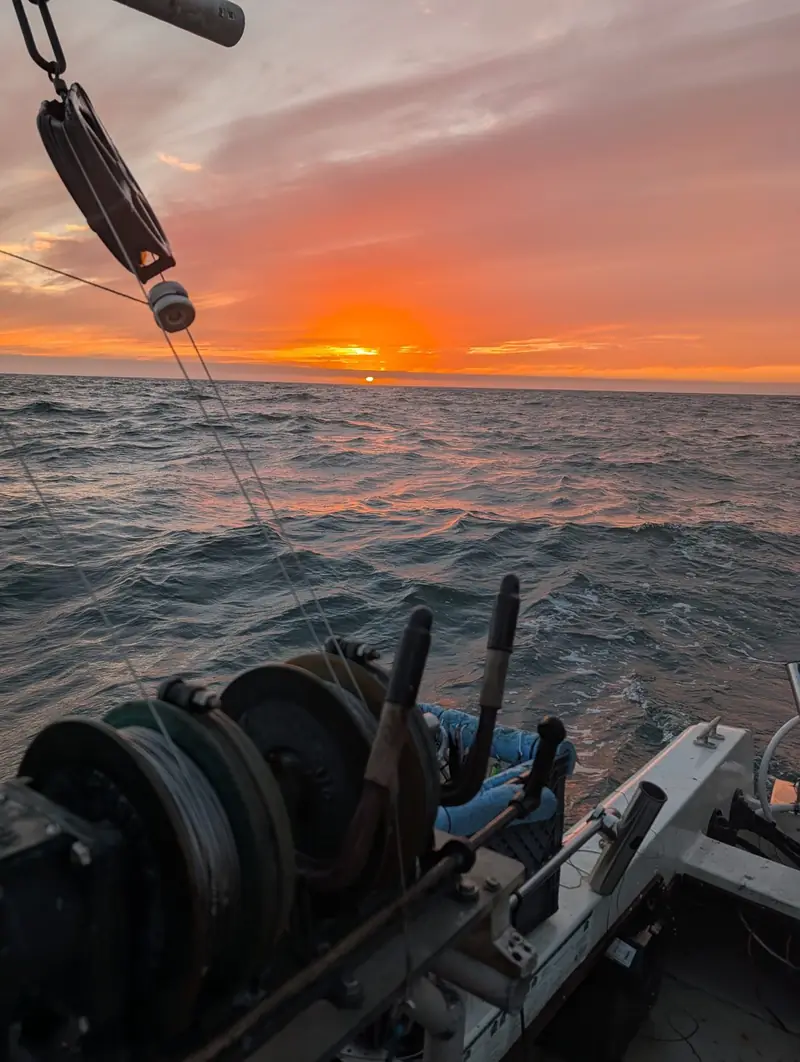
How we catch your fish
Hook and line, one king at a time
A wild king isn't farmed and it isn't easy. Here's how one gets from the open ocean to your front door.
Step 1
A small family boat heads out
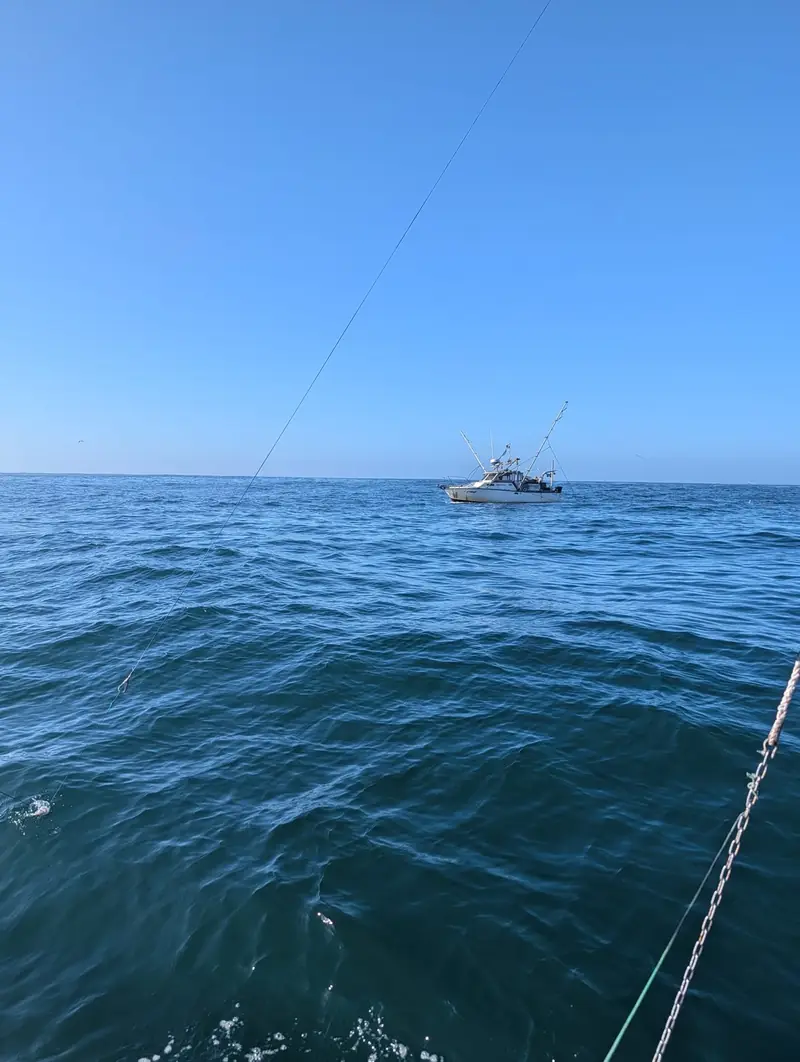
Every fish comes off a small family boat in the Mosquito Fleet. Joshua's boat fishes Monterey Bay, a few miles from home in Santa Cruz. [TBD: what time the boats leave, how long a trip lasts, and the home ports for Josh's and Patrick's boats.]
Step 2
We find the fish
This is a wild fish, and finding one in the open ocean is famously hard. Kings are among the hardest fish to catch. In Monterey Bay they feed on anchovy and herring pushed up by the deep Monterey Canyon, so that's where we look. [TBD: how we find them, and how deep they're caught.]
Step 3
Hook and line, one fish at a time
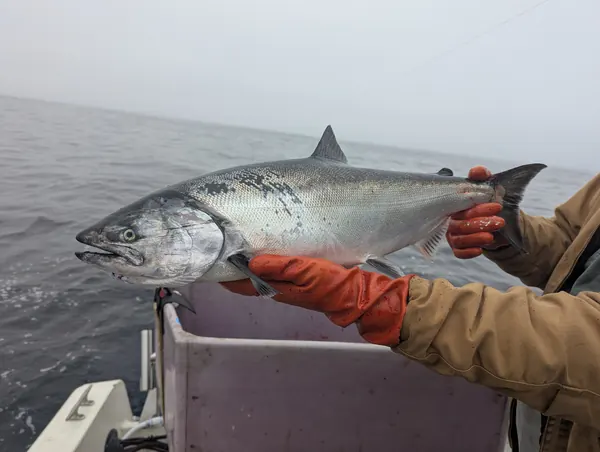
No nets. We troll with gurdies and a downrigger: every king is caught on hook and line and brought over the rail one at a time. How trolling works
Step 4
Cared for on deck, in minutes
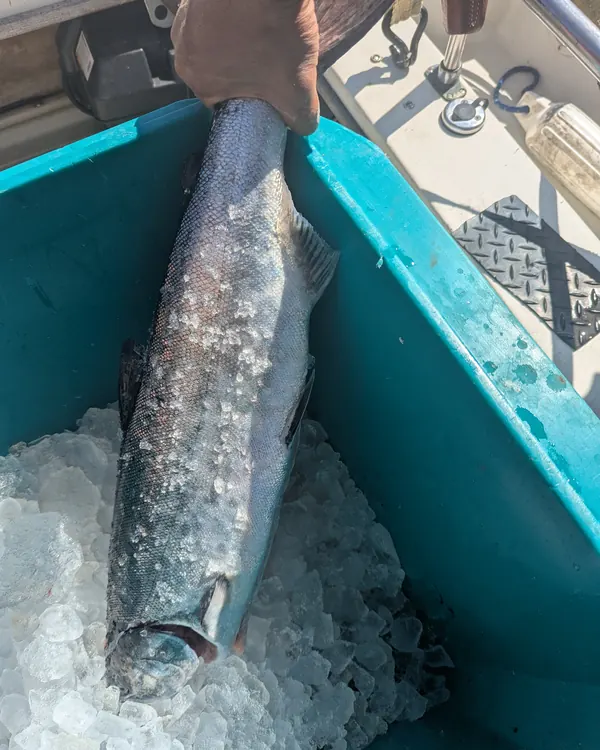
Each fish is dispatched the Japanese ike jime way, bled, and packed in ice right on deck. It's gutted at sea with the gills out, head and tail on. That's why the meat stays firm and clean.
Step 5
Back to the dock
The boat comes in and logs its catch, and each fish goes to the next person in line. [TBD: which docks the fleet lands at.]
Step 6
Weighed and tagged
Every fish is weighed on a certified scale, because California sells seafood by weight, not by the piece. We photograph it and tag it with its boat, port, landing date and weight, then text you.
Step 7
Shipped next day, never frozen
Once you pay, your king ships the same day, Monday to Thursday, and lands at your door the next day, guaranteed by UPS. It's never frozen.
How commercial trolling works
Gurdies, a cannonball and a slow boat
Here's how we fish for kings with our gurdies and downrigger, in plain words.
The gurdy
A gurdy is a winch on deck. It spools a steel troll wire in and out, so we can send lines down deep and bring them back up without hauling by hand.
The troll wire
The wire runs from the gurdy out to a pole and down behind the boat. Our downrigger works the same way on a smaller scale, holding a line at one depth.
The cannonball
A heavy lead weight on the end of the wire takes it down to where the kings are feeding.
Leaders and lures
Leaders, each with a lure, clip onto the wire at different depths, so we're fishing several depths at once.
Trolling slowly
The boat moves slowly ahead, pulling the lures through the water like bait on the move.
A king bites
When a king takes a lure, the gurdy brings the wire up and we unclip the leaders as they come. Then we land the fish over the rail, one at a time.
[TBD: how many lines we run, how deep we fish, which lures, and how fast we troll.]
That's how fresh local fish should get to you. See fresh fish delivery, or fresh local fish in California.
Want one of these?
Reserve a fishGet the first text when reservations open
Leave your number or your email. We'll tell you the day you can reserve your fish.